Product Spotlight- Case Study
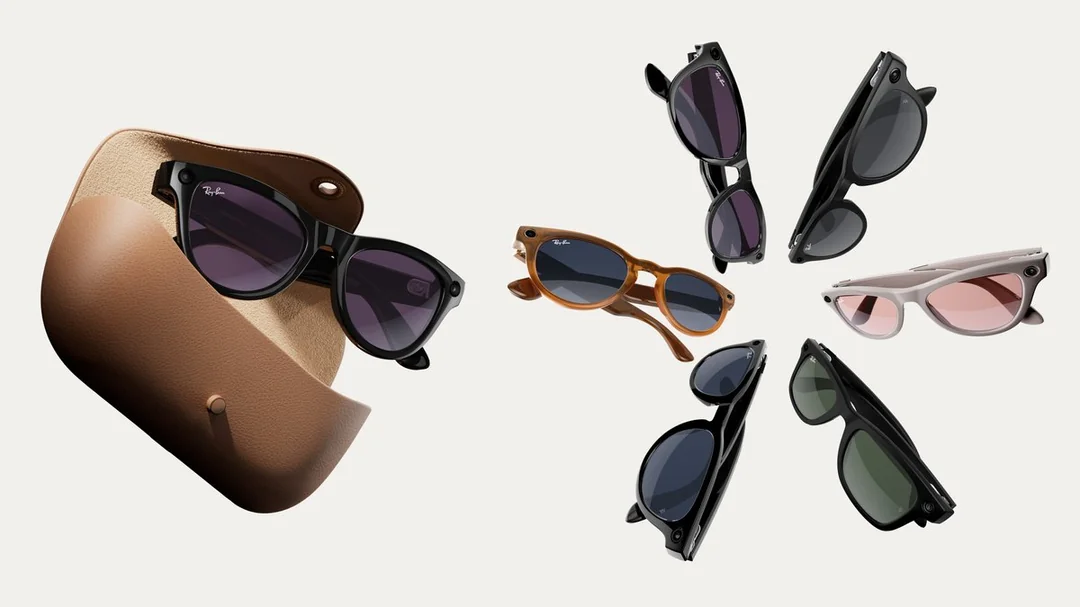
Meta Smart Glasses (Ray-Ban | Meta)
Meta Smart Glasses (Ray-Ban | Meta)
Tackling the perception of “creepy” wearables.
Tackling the perception of “creepy” wearables.
Tackling the perception of “creepy” wearables.
Looking at opportunities to make Meta Smart Glasses more trusted and socially acceptable by rethinking privacy as part of the user experience.
Looking at opportunities to make Meta Smart Glasses more trusted and socially acceptable by rethinking privacy as part of the user experience.
ROLE
Product Manager
Self-Directed Project
ROLE
Product Manager
Self-Directed Project
CONTEXT
CONTEXT
Stylish innovation meets social skepticism.
Stylish innovation meets social skepticism.
Meta’s smart glasses combine everyday style with new technology. They allow people to capture moments hands free, stream instantly, and use AI for real time help within a pair of Ray-Ban frames.
Public conversation, however, often focuses on one concern. Many people think the glasses are creepy. The cameras are small, the LED is easy to miss, and bystanders are not always sure if they are being recorded. This has led to headlines calling them "stalkerish" and created hesitation about wearing them in public.
At the same time, there are people who see real benefits. As one user put it: “These glasses are creepy to some, but for me — with low vision — they’re how I read street signs and menus. Don’t be too quick to judge.”
Meta’s challenge is clear: to make these glasses a product people trust to wear every day, without losing the utility that makes them meaningful to those who rely on them.
Meta’s smart glasses combine everyday style with new technology. They allow people to capture moments hands free, stream instantly, and use AI for real time help within a pair of Ray-Ban frames.
Public conversation, however, often focuses on one concern. Many people think the glasses are creepy. The cameras are small, the LED is easy to miss, and bystanders are not always sure if they are being recorded. This has led to headlines calling them "stalkerish" and created hesitation about wearing them in public.
At the same time, there are people who see real benefits. As one user put it: “These glasses are creepy to some, but for me — with low vision — they’re how I read street signs and menus. Don’t be too quick to judge.”
Meta’s challenge is clear: to make these glasses a product people trust to wear every day, without losing the utility that makes them meaningful to those who rely on them.
Meta’s smart glasses combine everyday style with new technology. They allow people to capture moments hands free, stream instantly, and use AI for real time help within a pair of Ray-Ban frames.
Public conversation, however, often focuses on one concern. Many people think the glasses are creepy. The cameras are small, the LED is easy to miss, and bystanders are not always sure if they are being recorded. This has led to headlines calling them "stalkerish" and created hesitation about wearing them in public.
At the same time, there are people who see real benefits. As one user put it: “These glasses are creepy to some, but for me — with low vision — they’re how I read street signs and menus. Don’t be too quick to judge.”
Meta’s challenge is clear: to make these glasses a product people trust to wear every day, without losing the utility that makes them meaningful to those who rely on them.
WHY SHOULD META CARE?
WHY SHOULD META CARE?
Trust is the barrier to everyday use.
Trust is the barrier to everyday use.
Smart glasses are not like other devices that stay in a pocket or on a desk. They are worn on the face and used in public, which makes them highly visible to everyone nearby. If people feel uneasy or suspicious when someone is wearing them, adoption will stall no matter how advanced the technology is.
Meta’s long term vision depends on these glasses becoming part of daily life, not just a novelty for early adopters. That future is only possible if the product feels trustworthy, both to the person wearing it and to the people around them.
The answer? Addressing concerns about privacy and transparency now. Meta has the chance to shape the category on its own terms. A commitment to responsible design could shift the conversation from fear and hesitation to acceptance and even enthusiasm.
Smart glasses are not like other devices that stay in a pocket or on a desk. They are worn on the face and used in public, which makes them highly visible to everyone nearby. If people feel uneasy or suspicious when someone is wearing them, adoption will stall no matter how advanced the technology is.
Meta’s long term vision depends on these glasses becoming part of daily life, not just a novelty for early adopters. That future is only possible if the product feels trustworthy, both to the person wearing it and to the people around them.
The answer? Addressing concerns about privacy and transparency now. Meta has the chance to shape the category on its own terms. A commitment to responsible design could shift the conversation from fear and hesitation to acceptance and even enthusiasm.
THE OPPORTUNITY
THE OPPORTUNITY
Turning privacy into a strength.
Turning privacy into a strength.
People already see Meta Glasses as stylish and useful, but trust remains the main barrier. Instead of leaving privacy in the background, Meta can bring it forward and make it part of the product’s appeal.
This could mean:
Making recording indicators obvious and easy for bystanders to understand.
Giving wearers clear controls for when and how recording happens.
Showing respect for public settings like schools or workplaces with “safe modes”.
Building transparency into the design so it feels reassuring, not hidden.
People already see Meta Glasses as stylish and useful, but trust remains the main barrier. Instead of leaving privacy in the background, Meta can bring it forward and make it part of the product’s appeal.
This could mean:
Making recording indicators obvious and easy for bystanders to understand.
Giving wearers clear controls for when and how recording happens.
Showing respect for public settings like schools or workplaces with “safe modes”.
Building transparency into the design so it feels reassuring, not hidden.
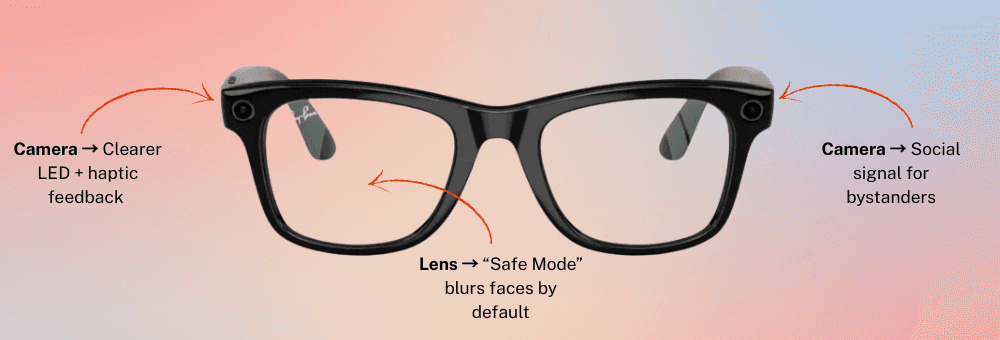
The current privacy LED is subtle and often missed. From a bystander’s view, it can be hard to know if the glasses are recording, which fuels the ‘creepy’ perception.
The current privacy LED is subtle and often missed. From a bystander’s view, it can be hard to know if the glasses are recording, which fuels the ‘creepy’ perception.
PROPOSED DIRECTION
PROPOSED DIRECTION
Make recording obvious, transparent, and socially acceptable.
Make recording obvious, transparent, and socially acceptable.
Meta can reduce skepticism and build trust by making privacy signals impossible to miss, while also giving users flexible ways to control how their glasses behave.
This could mean:
Enhanced privacy signals: stronger LED lights paired with haptic or audible cues so wearers and bystanders both know when recording starts.
Swappable “Privacy Mode” arms: an option that physically disables cameras for workplaces, schools, or other sensitive settings.
Visible recording strip: a subtle light band along the temple that makes recording unmistakable to people nearby.
Safe Mode: software features that disable recording or blur faces in environments where privacy matters most.
Meta can reduce skepticism and build trust by making privacy signals impossible to miss, while also giving users flexible ways to control how their glasses behave.
This could mean:
Enhanced privacy signals: stronger LED lights paired with haptic or audible cues so wearers and bystanders both know when recording starts.
Swappable “Privacy Mode” arms: an option that physically disables cameras for workplaces, schools, or other sensitive settings.
Visible recording strip: a subtle light band along the temple that makes recording unmistakable to people nearby.
Safe Mode: software features that disable recording or blur faces in environments where privacy matters most.
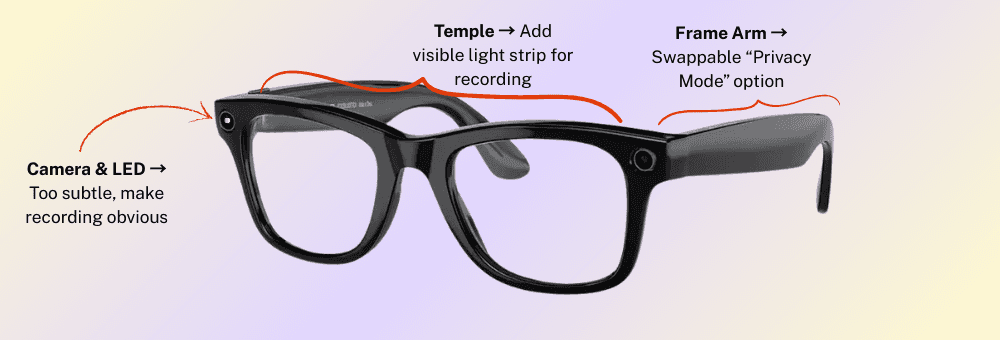
Proposed improvements include clearer recording indicators, haptic and audible feedback, and swappable ‘Privacy Mode’ arms to reassure both wearers and bystanders.
Proposed improvements include clearer recording indicators, haptic and audible feedback, and swappable ‘Privacy Mode’ arms to reassure both wearers and bystanders.
WHY THIS COULD WORK
WHY THIS COULD WORK
Aligning with how people live today.
Aligning with how people live today.
Our world today is digital, and it is in no hurry to decline anytime soon. People are already surrounded by cameras in phones, laptops, and public spaces. What makes smart glasses different is visibility. When recording feels hidden, people get uneasy. When it is clear and obvious, the discomfort fades because it matches the transparency people expect.
By leaning into visible privacy signals, Meta can normalize the glasses as part of everyday digital life. Stronger cues and simple controls reassure both wearers and bystanders, shifting the perception from suspicion to trust. This approach also positions Meta as a leader in responsible design at a time when the industry is under scrutiny.
Our world today is digital, and it is in no hurry to decline anytime soon. People are already surrounded by cameras in phones, laptops, and public spaces. What makes smart glasses different is visibility. When recording feels hidden, people get uneasy. When it is clear and obvious, the discomfort fades because it matches the transparency people expect.
By leaning into visible privacy signals, Meta can normalize the glasses as part of everyday digital life. Stronger cues and simple controls reassure both wearers and bystanders, shifting the perception from suspicion to trust. This approach also positions Meta as a leader in responsible design at a time when the industry is under scrutiny.
WHAT SUCCESS COULD LOOK LIKE
WHAT SUCCESS COULD LOOK LIKE
From hesitation to everyday wear.
From hesitation to everyday wear.
If these changes were introduced, the conversation around Meta Glasses could shift. Instead of being described as “creepy,” they would be recognized as transparent and trustworthy. Bystanders would know when recording is happening, and wearers would feel more comfortable using the glasses in public.
Success would mean:
Greater adoption: more people choosing to wear the glasses daily, not just as a novelty.
Improved perception: media coverage and public sentiment moving away from “spy glasses” toward “responsible wearable.”
Regulatory resilience: fewer concerns from policymakers as privacy is clearly addressed in the product design.
Expanded use cases: from accessibility to travel to work, the glasses becoming a trusted companion in everyday life.
If these changes were introduced, the conversation around Meta Glasses could shift. Instead of being described as “creepy,” they would be recognized as transparent and trustworthy. Bystanders would know when recording is happening, and wearers would feel more comfortable using the glasses in public.
Success would mean:
Greater adoption: more people choosing to wear the glasses daily, not just as a novelty.
Improved perception: media coverage and public sentiment moving away from “spy glasses” toward “responsible wearable.”
Regulatory resilience: fewer concerns from policymakers as privacy is clearly addressed in the product design.
Expanded use cases: from accessibility to travel to work, the glasses becoming a trusted companion in everyday life.
Looking for more?
Check out one of my other case studies :)
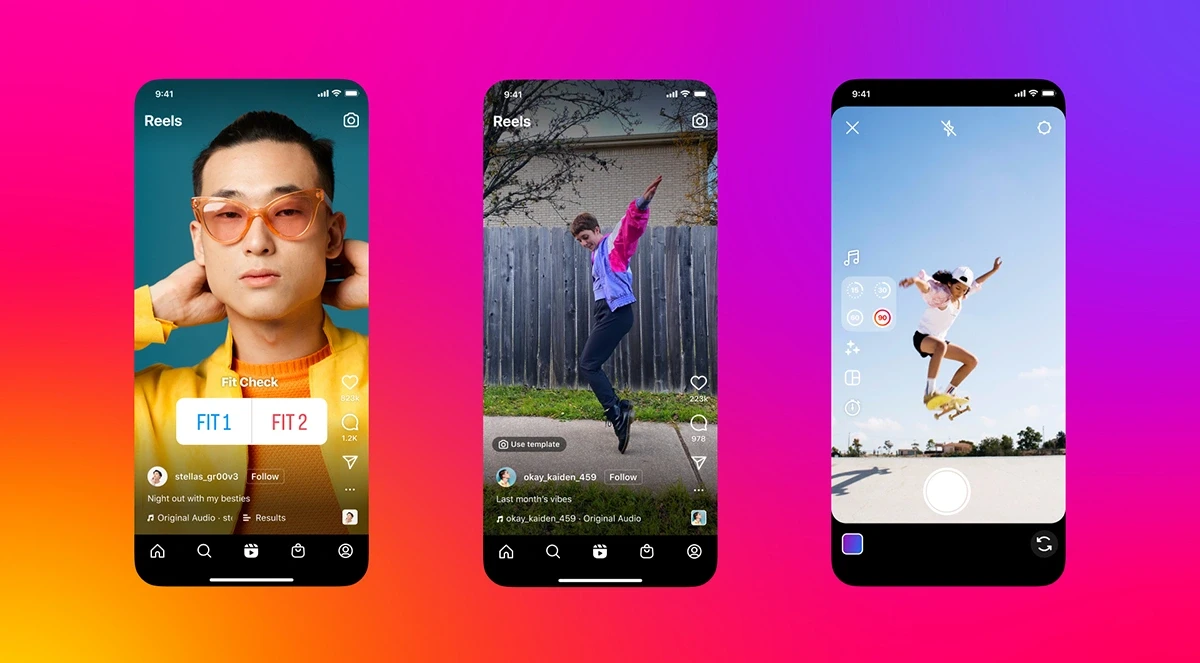
Investigating opportunities to make Reels more engaging for new creators.
Instagram - 2025
Looking for more?
Check out one of my other case studies :)
Investigating opportunities to make Reels more engaging for new creators.
Instagram - 2025
Looking for more?
Check out one of my other case studies :)
Investigating opportunities to make Reels more engaging for new creators.
Instagram - 2025